
IS IT LOVE, ATTRACTION OR OBSESSION?

LOVE, ATTRACTION, OBSESSION: AN ASTROLOGICAL PERSPECTIVE Do you feel a specific kind of attraction that doesn’t feel like a choice; it feels almost like an emergency? You keep awake at night, keep checking your phone every few minutes, and keep tossing around thinking about him/her. You want to sleep, but can’t. There is a pang; there is a pain, which seems endless. You strongly feel you are in love. But are you? Venus, the ultimate maestro! Love, attraction or obsession – whatever the heart may desire – Venus is at the source. She weaves the threads of the heart, from the first tremors of the attraction that slowly brings two people together, to the warmth of love that grows stronger and deeper, up to the passion of an obsession. Is it true love or just an intense attraction? The answer isn’t in your head; it’s written in the movement of your stars. (Your birth chart holds the blueprint for these silent obsessions.) We know that Venus is the planet of love. When Venus is related to the 5th house or 7th house, it brings love in life and relationships. Love just happens. Venus brings attraction, affection, admiration and the ability to enjoy each other’s company. It brings peace and calmness. Mars is the planet of raw attraction. It represents desire, passion, energy, and the instinctive magnetism that pulls two people toward each other. When Mars’ burning passion meets Venus’ coy charm and allure, it creates a powerful chemistry, resulting in an attraction of the highest order. If Moon influences Venus, then it gives you a deeper feeling of emotional security; you feel safe and calm in the relationship. The influence of Jupiter on Venus brings understanding, trust, and longevity in the relationship. Rahu is the planet of obsession and insatiable longing. When it influences Venus, relationships feel like an uncontrollable addiction. They often begin with strong attraction and a sense of forbidden passion, but the intensity soon brings confusion and emotional chaos. When the 8th house lord is involved in love: The 8th house is the house of transformation, of upheavals, or crisis. With the involvement of the 8th lord in love, do not expect a light romance. The relationship is much, much deeper and transformational. You no longer remain the person you were! 8th house love changes you – for better or for worse! 8th house love generally starts suddenly. A casual meeting on the metro, exchange of looks at a party, running into someone at the elevator, etc. It hits you like a force at first sight. Things move quickly, and you feel it is the greatest Love Story ever. It feels so deep and urgent! It feels like an adrenaline rush. Love seems fated, karmic, and destined. The bond runs deep, but it also brings fear, vulnerability, and even emotional confusion. Over time, you may experience jealousy, dominance, power struggles, or control issues. You no longer enjoy it, but also find it difficult to detach from it. There is a kind of invisible pull, an obsession – you know which is not good for you, but yet, you cannot break away from it. And ultimately, without warning, the relationship comes to an end! You are devastated. Many times, the breakup, however painful, was destined to learn a karmic lesson. The role of Rahu (North Node) in love: The North Node/Rahu governs infatuation, attraction, excitement, and a love that feels larger than life. When Rahu influences your love/relationship, you get attracted to someone from a different culture, country, or a diametrically different mindset; or to someone much younger or older than you. The relationship is never ‘normal’; it is always ‘unconventional. Rahu is the Antenna; it creates an insatiable pull toward what we think we need. Ketu is the Axe; it represents the karmic baggage we haven’t processed yet. When these two collide in a relationship, it doesn’t create love; it creates a Loop. You fall in love with a person who may have all the vices you always hated. But somehow, this particular person attracts you. His meanness, his wickedness entice you. You may even know that the relationship may go nowhere, but the power of attraction far outweighs your logic. Rahu creates an illusion of love – a strong one. You believe that your partner is your soulmate, and you are completely obsessed with him/her. It is an addictive kind of love. It affects you more on the psychological level than on an emotional level. In reality, it is an overwhelming, uncontrollable attraction that you just cannot resist. Another symptom of Rahu’s involvement in love is that it amplifies desires, but abruptly. One day, your mind is consumed with longings, the other day, you do not feel anything. There are flashes of intense craving. This kind of love is forceful, possessive, and addictive. It blurs your power of reasoning and judgement. Even when you know something is wrong, you keep hoping that someday things will improve – despite the deception, the drama, and distressing conflicts. And then one day, the relationship breaks – as abruptly as it started! The Essence: Remember, real love just happens. It is a flow, a breeze of fresh air. There is no need to control, there is no hurry, there are no loud claims; only trust, peace, and understanding. It is to be lived with, not possessed or won. It is real with its share of difficulties, differences and doubts. But it surpasses all and STAYS!
AKSHAYA TRITIYA: NEW BEGINNINGS, PROSPERITY AMPLIFIED

hink you know Akshaya Tritiya? Think again. Uncover the deeper meaning behind this powerful day of cosmic alignment and timeless abundance.
ALL YOU WANTED TO KNOW ABOUT DHANTERAS

DHANTERAS – THE BEGINNING OF DIWALI Deepawali (Deepa-Lamps; Awali-Row) meaning ‘A row of lamps’ is also called Diwali in its shortened version. Diwali is a five-day festival celebrated all over India and also in many other countries across the globe. Each of the five days of Diwali has its own meaning and significance. Dhanteras marks the beginning of the festivities of Diwali. Meaning of Dhan-trayodashi: Trayodashi means “thirteenth day” of the Hindu fortnight and Dhan means “wealth”. Thus, as the name implies, Dhanteras falls on the thirteenth day of Krishna Paksha (Dark Fortnight) in the Hindu month of Kartik. Hence another name for Dhanteras is Dhantrayodashi. People worship Goddess Laxmi and Lord Kuber to bless them with prosperity and well being. What is the Significance of Dhanteras? In the story of Sagar Manthan, it was on this day that Lord Dhanvantari appeared with the nectar urn from the churning ocean. Along with him, jewellery and precious gems also emerged from the ocean. Since then this day was named ‘Dhanteras’ and the tradition of buying utensils and jewellery started. Ayurvedic vaidyas (doctors) consider Lord Dhanwantri as the Father of Ayurveda-the bestower of health and celebrate this day as his birthday. They distribute neem leaves and mishri (candy sugar) as prasad to visitors. Dhan also means Wealth. Undoubtedly, Dhanteras is also very important for businessmen, traders and merchants. Goddess Lakshmi along with Lord Kubera (God of wealth) is worshipped on this day. Dhanteras is also known as the day of “Yama Deep Daan”. Lord Yama (God of Death) is worshipped on this day to provide prosperity and well-being to all and to avert untimely death. Lord Kuber is generally worshipped through the medium of Kuber Yantra. What is done on Dhanteras? The following are the different rituals and traditions followed during Dhanteras: SHOPPING: Dhanteras marks the grand finale of all major Diwali shopping. It is auspicious to purchase a new cooking/eating vessel this day. The new utensil purchased is filled with puffed rice (kheel) and some coins. This vessel is then kept at the place where Lakshmi Pooja is to be done on Diwali night. It is believed that on Diwali night, Lord Dhanwantri will fill this vessel with health, while Lord Kubera will fill it with wealth. 2. OFFERINGS: Different types of offerings are prepared on this day in different regions of India. In Maharashtra, there is a tradition to offer a Naivedya (holy offering) of lightly crushed dry coriander seeds and jaggery. Whole wheat porridge or atte ka halwa or lapsi is prepared and distributed as prasad in parts of North and East India. In most of the households, Panchamrit, a preparation made with honey, curd, milk, ghee and sugar is distributed as prasad. Also, Kheer made from rice, milk and sugar is another favourite offering. 3. YAM DEEP DAAN: In the evening, one a four-faced Diya or thirteen oil lamps made of wheat flour are lit. Devotees keep these lamps outside the house with their flame facing southwards. (This is the only day in the whole year when the lamp’s flame is kept facing southwards.) The following mantra is to be recited while lighting the lamp/s: मृत्युना पाशदंडाभ्यां कालेन श्यामसह । त्रयोदश्यांदिपदानात् सूर्यजः प्रीयतां मम ।। Meaning: I offer these thirteen lamps to Yama, the son of the Lord Sun so that He liberates me from the clutches of death and bestows His blessings. What can you buy for Dhanteras? What shouldn’t you buy for Dhanteras? Silver/gold jewellery or coins. Utensils, preferably copper or brass vessels. Brooms. Gomati Chakra, Cowries, Gunja Seeds, Conch/Shankh, Lotus seed mala/Gatte ki Mala. Coriander seeds; preferable plant some of these on Dhanteras. New books of accounts. Idols/Yantra of Laxmi, Ganesha & Kuber. Property. Salt. Avoid buying steel, iron, aluminium, plastic, glass or ceramic utensils on Dhanteras. Rahu has an influence on these elements. Avoid buying a vehicle/car on Dhanteras. Sharp instruments like knives, scissors, etc. Black or dark coloured articles. Mirrors. Oil, Ghee, Butter. Crockery. Gifts for others. Wood or wooden articles. Why do we buy broom on Dhanteras? Buying a new broom on Dhanteras is a very important traditional ritual. We welcome Goddess Lakshmi to our clean houses to destroy all the negative energies and get rid of financial problems. This brings prosperity and fortune to the family. It also helps to get rid of debts. Whenever you buy a new broom, tie a white thread to it. This will ensure that Maa Lakshmi resides in your house permanently. Purchasing three brooms is considered auspicious. DHANTERAS 2024 MUHURAT Dhanteras Explained: Your Quick Q&A Guide Q1: What exactly is Dhanteras? Dhanteras, also known as Dhantrayodashi, is the first day of the five-day Diwali festival. Celebrated on the 13th day of the dark fortnight in the Hindu month of Kartika, it marks the beginning of Diwali festivities. Q2: Why is it called ‘Dhanteras’? ‘Dhan’ means wealth, and ‘Teras’ refers to the 13th day. The day is associated with the emergence of Lord Dhanvantari, the god of health and Ayurveda, and the goddess Lakshmi, symbolising wealth and prosperity. Q3: What are the key rituals of Dhanteras? Cleaning and Decorating Homes: Homes are thoroughly cleaned and decorated with rangoli and lights to welcome prosperity. Lighting Diyas: Lighting oil lamps, especially 13 diyas facing south, is a tradition to honor Yama, the god of death, seeking protection and longevity. Lakshmi and Dhanvantari Puja: Devotees worship Goddess Lakshmi for wealth and Lord Dhanvantari for health. Shopping: Purchasing gold, silver, or new utensils is considered auspicious, symbolizing the invitation of wealth into the home. Q4: What should I avoid buying on Dhanteras? It’s advisable to avoid purchasing items like brooms, salt, or steel utensils, as they are considered inauspicious on this day. Q5: Can I perform Dhanteras rituals at home? Absolutely! Performing Dhanteras rituals at home is a wonderful way to invite prosperity and health into your life. Ensure to follow the auspicious timings and use traditional offerings for the puja.
The Wealth Astrology Guide To Help You Get Rich.

We all have heard the famous quote: ‘Money is not everything but everything needs money.” One of the four aims of human life in Indian philosophy is Artha meaning acquisition of wealth and financial security. Goddess Lakshmi is the goddess of wealth, fortune, luxury, material fulfilment and contentment. She has been described as चंचला meaning unsteady and चपला meaning swift or restless. This indicates the unpredictable and inconsistent nature of wealth. Here, I shall analyse the role of Astrology in determining the financial status of a person and how it can help in overcoming monetary problems. Which house in astrology is for money? In astrology, conventionally four houses are very important to consider the financial status of a person, viz the 2nd, 5th, 8th and 11th houses. 2nd house shows one’s personal assets, savings and economic growth. This house hints at how the money will be earned. 5th house is for sudden gains and gains through speculation, lottery, etc. 8th house indicates personal assets accumulated through partnership and/or marriage, hidden deals, inheritance, etc. 11th house is for one’s personal assets accrued through self-efforts, business and career. This house indicates huge gains and high bracket income. The 9th house is also important as it is the house of luck and prosperity. It decides how fortune will treat you. In fact, the 5th and 9th houses are considered the houses of wealth (Lakshmi Sthana). The main Houses indicating financial issues such as debts, loans, losses, etc are the 6th, 8th, 11th & 12th Houses. Which planets are associated with money? The main planets associated with money are: Venus: Since Venus is the natural ruler of the 2nd house, its position is very important. The placement of Venus in a chart can reveal a lot about your ability to attract money. If placed in the 2nd or 8th house, it will give you substantial wealth. A weak Venus gives financial problems. Jupiter: Jupiter is the planet of fortune, luck, richness and expansion. Jupiter, if in the 2nd or 8th house, gives money through multiple and unexpected sources. Saturn: Saturn provides permanency and long-term potential to earn and retain wealth. Its placement in the 2nd or 8th house gives opportunities to earn money in a foreign land and helps in increasing savings. Mars: Mars in the 2nd house provides the energy and drive to earn money and gain wealth. While Mars in the 8th house gives unearned gains. However, it also makes one spend impulsively. Uranus (sudden wealth) and Pluto (God of Riches) with auspicious aspects from Venus and/or Jupiter can bring copious wealth. Some important planetary placements and combinations in the horoscope for wealth: A person with a strong placed Jupiter will never be empty-handed. A strong Moon too makes a person affluent. Moon+Mars conjunction also called ‘Laxmi Yoga’ blesses a person with wealth and fame. Uranus aspected by Venus gives sudden, unexpected wealth such as winning a lottery. People with a Venus-Jupiter connection in their horoscopes – be it by conjunction or aspect, never face any scarcity of money in their lives. Any connection between the 2nd lord and the 11th lord through placement, conjunction or aspect indicates enormous wealth. In fact, this is a very strong wealth-producing combination. It bestows the native with multiple gains. Sun in the second house of the horoscope can make a person a millionaire. A person with 2nd lord placed in the 5th house earns wealth through his wisdom and creativity. A person with 2nd lord in the 4th house is blessed with all kinds of comforts and luxuries. 5th lord in the 10th house or the 10th lord in the 5th house gives abundant wealth. The conjunction of the 5th and 9th lords or 9th and 10th lords also is a good combination for wealth. The presence of the 9th lord in the 11th house makes a person lucky in matters of wealth. If the 10th lord is placed in the 1st or 2nd house, the native’s wealth will keep increasing with time. If the 11th house contains or is aspected by auspicious planets, the native will never be short of money in his life. Rahu in the 11th house gives substantial gains without much sweat. The placement of Venus in the 12th house of the horoscope ensures a luxurious life. At the same time, the native should be careful when taking loans for their extravagant expenses. If there is any parivartan/exchange between the 2nd lord with the 5th lord or the 11th lord, the person earns a lot of money. It is essential that the above placements and combinations are not aspected or impacted by malefic planets. Now, let us discuss some remedies related to wealth. Remedies to attract wealth: “Kubera” is the god of wealth and the direction of Kubera is North. Hence place the locker in the North zone of the house. Keep the cash locker/cupboard adjacent to the south wall of the house such that it opens in the north direction. Do not take anything free of cost nor offer any of your services free of cost. Always make sure that you pay/receive some monetary compensation. Take a small piece of Parijat root and 11 white gunja seeds. Place them together in a small silver case or locket. Wear this locket to attract sudden wealth. If your income is unsteady or irregular, do this remedy. : Starting from the first Saturday of Shukla Paksha (bright period of phases of the moon), start distributing poori – sabji to the poor for 11 consecutive Saturdays. This will ensure a steady and continuous flow of income. Never return home empty-handed. Always get something – be it a flower or fruit or some snack. Never keep nor use any broken vessels in the house. Practical Remedies to get rid of finance-related problems: Salt remedy: If financial problems trouble you despite your great efforts, then do this remedy. Keep salt in a clay vessel in the northeast direction of your house. Keep changing the
Significance And Simple Remedies Of Chaitra Navratri
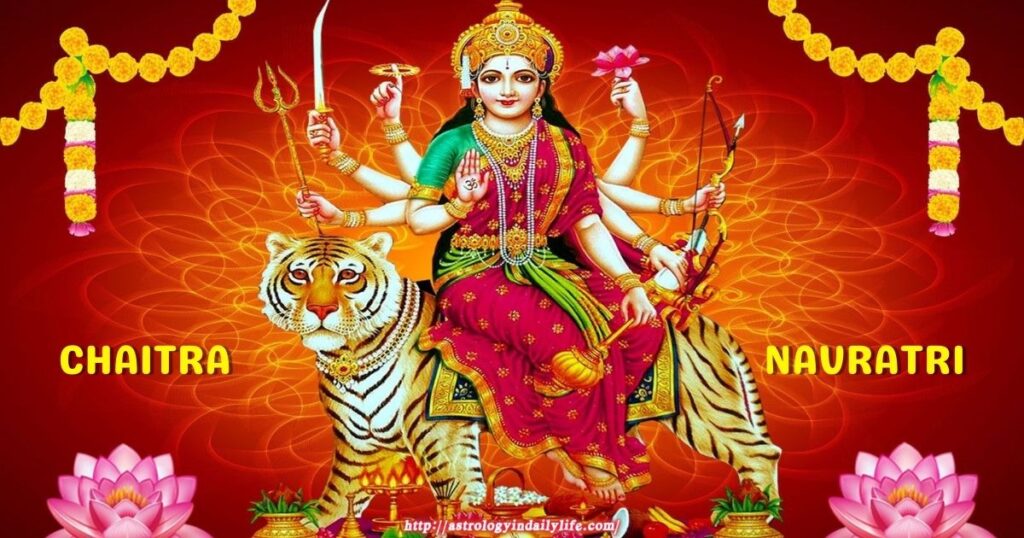
Chaitra Navratri represents more than a seasonal changeover; it is the spiritual and astrological beginning of the Hindu New Year. Also known as Vasant Navratri, this nine-night period coincides with the arrival of spring, signalling a profound shift in both the natural world and the cosmic order. COSMIC ALIGNMENT: The timing of Chaitra Navratri is calculated by the lunar calendar, typically falling between March and April. From an astrological perspective, this period is exceptionally powerful. It coincides with the Sun’s transit into Aries, the first sign of the zodiac. Aries is governed by Mars, a planet embodying courage, vitality, and new beginnings. This alignment provides the fiery energy required for spiritual awakening and the psychological strength to overcome internal demons. THE POWER OF NINE: Navratri spans nine days and nights, each dedicated to a specific manifestation of the Divine Feminine. At the heart of Chaitra Navratri lies the worship of the divine Shakti in her various forms as Goddess Durga, Lakshmi, and Saraswati. From Shailaputri, the core energies of strength, prosperity, and wisdom. In Vedic Numerology, the number nine represents “Purnatva” or completion and fulfilment. The journey from Shailaputri (symbolising foundational purity) to Siddhidatri (the bestower of spiritual perfections) mirrors the soul’s evolution toward enlightenment. In 2026, Chaitra Navratri begins on March 30 and ends on March 19. What makes Chaitra Navratri special: Several pillars of devotion characterise the festival: Glorification of Feminine Power: Chaitra Navratri celebrates the strength, patience, resilience and importance of feminine energy in the universe. Goddess Durga is the epitome of feminine power. People worship her with full fervour and devotion all nine days of the Navratri. This culminates in Kanya Puja on the eighth day (Ashtami), where young girls are worshipped as living embodiments of the Goddess. Nine days of fasting and prayers: During Navratri, devotees observe fasts and offer prayers to the goddess Durga for nine consecutive days. The fasting and prayers are intended to detoxify the mind, body, and spirit, creating a vessel for higher consciousness. Celebration of Ram Navami: The final day of Chaitra Navratri is Ram Navami, which marks the birth anniversary of Lord Rama. It is a highly auspicious day for Hindus who celebrate it with great enthusiasm and devotion by offering prayers, performing puja, and singing bhajans. New Ventures: Chaitra Navratri is also an auspicious time to launch business ventures or make significant financial investments. Spiritual significance: Chaitra Navratri is an opportunity for spiritual growth and self-realisation. It is a time to reflect on one’s actions and seek forgiveness for any wrongdoings. The festival brings peace, prosperity, and happiness to those who observe it with devotion and sincerity. Try these astrological remedies for auspicious Chaitra Navratri: Burn clove (Laung) and camphor (Kapur): Burning pure camphor (Kapur) with cloves during Aarti is a powerful method to clear stagnant energy and improve the financial atmosphere of a household. Click here to know which form of goddess you should worship during Navratri. Offer Kheer to Maa Lakshmi: Mata Lakshmi is the goddess of wealth. If you pray for the happiness and prosperity of the house by offering rice kheer to Mata Lakshmi on Fridays during Navratri, then there will always be happiness and prosperity in your life. Perform Havan with mango wood: Havan marks the culmination of the nine days in Navratri. Havan performed with mango wood on Navami Tithi neutralises all the negative forces from your house, making way for happiness and prosperity. The Hibiscus Remedy: Red is the preferred colour of Maa Durga. Offering five red hibiscus flowers with a red chunri is highly auspicious. Once dried, these flowers can be kept in your treasury or cash box to maintain positive financial flow. Importance of Cowries in Worship: Cowries represent wealth. To resolve stuck finances or open new income streams, place seven vermilion-stained cowries near the Kalash during its establishment. On the final day, tie them in a yellow cloth and place them in your safe. With this remedy, not only will you recover your stuck money, but also new sources of income will open up. Water Remedy for Career: During Chaitra Navratri, keep a vessel filled with water in the east or north direction at the main door of the office. Add red and yellow flowers to it. This assures success in your career and resolves the problems of unemployment and business, if any. Mantras: During Navratri, one must recite the Navarna mantra “Aum Ain Hree Klein Chamundayai Vicchai” as much as possible. Durga Saptashati must be recited at least once during the days of Navratri. PS: Offering Tulsi and Durva to Maa Durga is prohibited. To read about the various NAVRATRI MANTRA REMEDIES, click HERE.