ALL YOU WANTED TO KNOW ABOUT DHANTERAS

DHANTERAS – THE BEGINNING OF DIWALI Deepawali (Deepa-Lamps; Awali-Row) meaning ‘A row of lamps’ is also called Diwali in its shortened version. Diwali is a five-day festival celebrated all over India and also in many other countries across the globe. Each of the five days of Diwali has its own meaning and significance. Dhanteras marks the beginning of the festivities of Diwali. Meaning of Dhan-trayodashi: Trayodashi means “thirteenth day” of the Hindu fortnight and Dhan means “wealth”. Thus, as the name implies, Dhanteras falls on the thirteenth day of Krishna Paksha (Dark Fortnight) in the Hindu month of Kartik. Hence another name for Dhanteras is Dhantrayodashi. People worship Goddess Laxmi and Lord Kuber to bless them with prosperity and well being. What is the Significance of Dhanteras? In the story of Sagar Manthan, it was on this day that Lord Dhanvantari appeared with the nectar urn from the churning ocean. Along with him, jewellery and precious gems also emerged from the ocean. Since then this day was named ‘Dhanteras’ and the tradition of buying utensils and jewellery started. Ayurvedic vaidyas (doctors) consider Lord Dhanwantri as the Father of Ayurveda-the bestower of health and celebrate this day as his birthday. They distribute neem leaves and mishri (candy sugar) as prasad to visitors. Dhan also means Wealth. Undoubtedly, Dhanteras is also very important for businessmen, traders and merchants. Goddess Lakshmi along with Lord Kubera (God of wealth) is worshipped on this day. Dhanteras is also known as the day of “Yama Deep Daan”. Lord Yama (God of Death) is worshipped on this day to provide prosperity and well-being to all and to avert untimely death. Lord Kuber is generally worshipped through the medium of Kuber Yantra. What is done on Dhanteras? The following are the different rituals and traditions followed during Dhanteras: SHOPPING: Dhanteras marks the grand finale of all major Diwali shopping. It is auspicious to purchase a new cooking/eating vessel this day. The new utensil purchased is filled with puffed rice (kheel) and some coins. This vessel is then kept at the place where Lakshmi Pooja is to be done on Diwali night. It is believed that on Diwali night, Lord Dhanwantri will fill this vessel with health, while Lord Kubera will fill it with wealth. 2. OFFERINGS: Different types of offerings are prepared on this day in different regions of India. In Maharashtra, there is a tradition to offer a Naivedya (holy offering) of lightly crushed dry coriander seeds and jaggery. Whole wheat porridge or atte ka halwa or lapsi is prepared and distributed as prasad in parts of North and East India. In most of the households, Panchamrit, a preparation made with honey, curd, milk, ghee and sugar is distributed as prasad. Also, Kheer made from rice, milk and sugar is another favourite offering. 3. YAM DEEP DAAN: In the evening, one a four-faced Diya or thirteen oil lamps made of wheat flour are lit. Devotees keep these lamps outside the house with their flame facing southwards. (This is the only day in the whole year when the lamp’s flame is kept facing southwards.) The following mantra is to be recited while lighting the lamp/s: मृत्युना पाशदंडाभ्यां कालेन श्यामसह । त्रयोदश्यांदिपदानात् सूर्यजः प्रीयतां मम ।। Meaning: I offer these thirteen lamps to Yama, the son of the Lord Sun so that He liberates me from the clutches of death and bestows His blessings. What can you buy for Dhanteras? What shouldn’t you buy for Dhanteras? Silver/gold jewellery or coins. Utensils, preferably copper or brass vessels. Brooms. Gomati Chakra, Cowries, Gunja Seeds, Conch/Shankh, Lotus seed mala/Gatte ki Mala. Coriander seeds; preferable plant some of these on Dhanteras. New books of accounts. Idols/Yantra of Laxmi, Ganesha & Kuber. Property. Salt. Avoid buying steel, iron, aluminium, plastic, glass or ceramic utensils on Dhanteras. Rahu has an influence on these elements. Avoid buying a vehicle/car on Dhanteras. Sharp instruments like knives, scissors, etc. Black or dark coloured articles. Mirrors. Oil, Ghee, Butter. Crockery. Gifts for others. Wood or wooden articles. Why do we buy broom on Dhanteras? Buying a new broom on Dhanteras is a very important traditional ritual. We welcome Goddess Lakshmi to our clean houses to destroy all the negative energies and get rid of financial problems. This brings prosperity and fortune to the family. It also helps to get rid of debts. Whenever you buy a new broom, tie a white thread to it. This will ensure that Maa Lakshmi resides in your house permanently. Purchasing three brooms is considered auspicious. DHANTERAS 2026 MUHURAT Dhanteras Explained: Your Quick Q&A Guide Q1: What exactly is Dhanteras? Dhanteras, also known as Dhantrayodashi, is the first day of the five-day Diwali festival. Celebrated on the 13th day of the dark fortnight in the Hindu month of Kartika, it marks the beginning of Diwali festivities. Q2: Why is it called ‘Dhanteras’? ‘Dhan’ means wealth, and ‘Teras’ refers to the 13th day. The day is associated with the emergence of Lord Dhanvantari, the god of health and Ayurveda, and the goddess Lakshmi, symbolising wealth and prosperity. Q3: What are the key rituals of Dhanteras? Cleaning and Decorating Homes: Homes are thoroughly cleaned and decorated with rangoli and lights to welcome prosperity. Lighting Diyas: Lighting oil lamps, especially 13 diyas facing south, is a tradition to honor Yama, the god of death, seeking protection and longevity. Lakshmi and Dhanvantari Puja: Devotees worship Goddess Lakshmi for wealth and Lord Dhanvantari for health. Shopping: Purchasing gold, silver, or new utensils is considered auspicious, symbolizing the invitation of wealth into the home. Q4: What should I avoid buying on Dhanteras? It’s advisable to avoid purchasing items like brooms, salt, or steel utensils, as they are considered inauspicious on this day. Q5: Can I perform Dhanteras rituals at home? Absolutely! Performing Dhanteras rituals at home is a wonderful way to invite prosperity and health into your life. Ensure to follow the auspicious timings and use traditional offerings for the puja.
KNOW THE SIGNIFICANCE OF PITRA PAKSHA
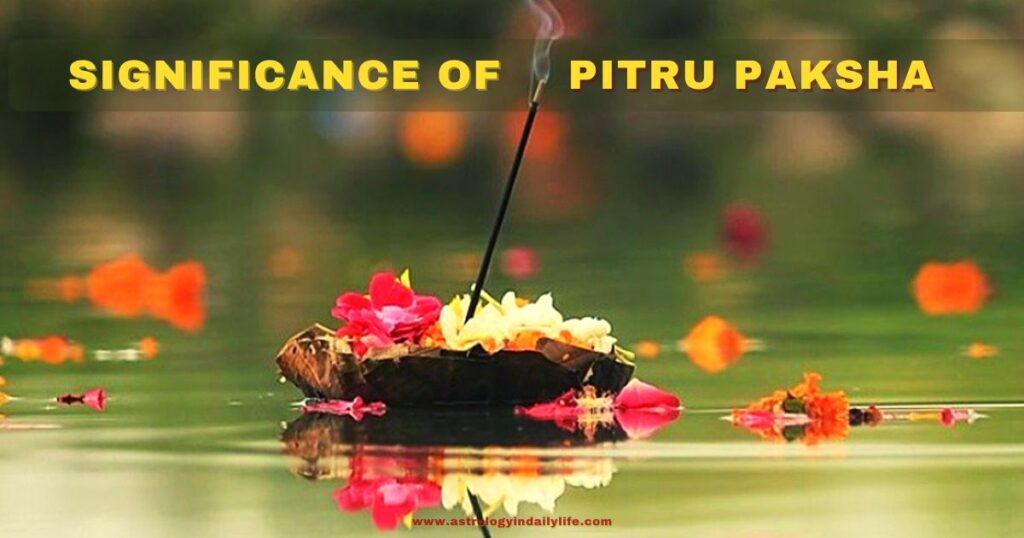
Pitru Paksha literally the ‘fortnight for the Ancestors‘. Pitru Paksha, also known as Mahalaya Paksha, is a 16-day period in the Hindu lunar calendar dedicated to paying homage to one’s ancestors or pitrs. Almost every culture in the world honours its dead ancestors. For instance, the Japanese Buddhists observe Bon-Odori where families come together to welcome their ancestral spirits. Mexicans observe Dia de los Muertos or the Day of the Dead. Furthermore, Halloween, or All Hallow’s Eve, is a celebration specifically for remembering the dead, the saints, martyrs, and all other faithfully departed. In fact, in Chinese culture, there is an entire month called ‘ghost month’ which is dedicated specifically to honouring their ancestors. Likewise, in India, too, Hindus have a period of paying homage to their departed ancestors. This period of 16 days is called Pitru Paksha – ‘Pitru’ means Ancestors and ‘Paksha’ means a fortnight. Thus, the sixteen days of the Hindu month of Bhadrapada is Pitru Paksha. This Paksha begins on Purnima – Full Moon Day and ends on Amavasya – No Moon Day. The last day – ‘Sarva Pitri Amavasya‘ or the ‘Mahalaya Amavasya’ – is a day for honouring all the ancestors. This year, Pitru Paksha runs from 26 September 2026 to 10 October 2026. Pitru Paksha is not a time for celebrations. It is, in fact, a fervent period for remembering departed ancestors and performing special rites to help save their souls. Hindus believe that during the Pitru Paksha, their deceased ancestors leave their abode, Pitru Lok (Land of the Dead) and descend on Prithvi Lok viz the Earth. STORY BEHIND OBSERVANCE OF PITRU PAKSHA In Mahabharata, when the legendary Karna reached heaven after death, he was offered food made of solid gold. In his lifetime, he was famous as ‘Daanveer’ due to his bigheartedness and generous nature. He complained to Lord Indra that he was very hungry and obviously, could not eat gold. Indra smiled and reminded him that though he offered a lot of gold in charity when alive, he never provided any food to his ancestors or performed the Shraddha ceremony. Karna realized his mistake. He requested that Lord Indra give him one chance to return to Earth and correct his mistake. Thereby, Lord Indra granted him his wish. Karna returned to Earth and fed the poor for 16 days. This was the period of Pitru Paksha. MAIN RITUALS OF PITRU PAKSHA There are three main rituals of Pitru Paksha – Tarpan, Shraadh and Pind Daan. ‘Trup’ which means satisfaction is the root word of the word ‘Tarpan’. Thus, Tarpan means paying oblations to Gods, Sages and ancestors by offering water to satisfy them with Black sesame (til) seeds mixed in it. One should perform this ritual while standing in a river or a water body. Tarpan for the deceased ancestors is performed facing south. A ring made of dried Kusha or Durva grass is worn on the finger while performing the ritual. ‘Pind Daan’ is another ritual performed along with Shraddha. This involves making an offering of ‘Pindis’. Pindis are balls of cooked rice and barley with black sesame seeds, cow’s milk, honey, sugar and ghee. Pind Daan is usually done either on a silver plate or a leaf. The word ‘Shraddha’ has originated from ‘Shraddha’ (faith). Shraddha is the ritual of offering food to the priests (Brahmins). While feeding the priests one expresses his gratefulness to his ancestors through them. Besides food, one can also distribute clothes and money to the Brahmins and the poor. IMPORTANCE OF CROWS IN PITRU PAKSHA Hindus believe that crows are messengers of Yama, the God of Death. Any food fed to the crows directly satiates the ancestors’ spirit. According to the Puranas, the crows had tasted the nectar, Amrit – which made them immortal. Even today, it is widely believed that no crow dies its natural death. It dies only sudden death due to an attack or accident. Incidentally, both crows and the Peepal (Sacred Fig) tree represent the Pitrus – the dead ancestors. Hence, feeding crows and watering the Peepal tree are important rituals of Pitru Paksha. Besides the crows, there is also a custom of feeding cows, dogs, ants and beggars during Pitru Paksha. POPULAR PLACES OF CONDUCTING PITRU PAKSHA RITUALS Brahma Kapal Ghat, Badrinath Haridwar in Uttarakhand Dev Prayag in Uttarakhand Trimbakeshwar in Nashik, Maharashtra Bharat Kund in Ayodhya, Uttar Pradesh Vishranti Tirth in Mathura, Uttar Pradesh Assi Ghat and Manikarnika Ghat in Varanasi, Uttar Pradesh Triveni Samgam in Allahabad, Uttar Pradesh Naimishaaranya in Uttar Pradesh Narmada Ghat in Jabalpur, Madhya Pradesh Avantika, Kshipra Ghat in Madhya Pradesh Pehova in Kurukshetra, Haryana Pushkar in Ajmer, Rajasthan Matrugaya Kshetra, Siddhpur in Patan, Gujarat Dwarka in Jamnagar, Gujarat Gaya Ghat in Bihar Jagannath Puri in Orissa Tirupati in Tamil Nadu RULES REGARDING FOOD PREPARED FOR OFFERINGS Firstly, the food prepared is Sattvic – ie without onion and garlic. Non-vegetarian food is strictly prohibited. Furthermore, one should avoid root vegetables like potatoes, sweet potatoes, colocasia, radish, carrots, etc, and vegetables like eggplants, tomatoes, cabbage, and drumsticks. Even strong spices should be avoided. Usually, the preferred sattvic dishes include Urad dal vadas, rice kheer or payasam, seasonal vegetables like all types of gourd, raw plantains, ladyfinger, green beans, dals, leafy vegetables, seasonal fruits, etc. Also, it is best to serve food is on banana leaves. After preparing the food, keep aside food for cow, dog and crow. Thereafter, offer food to Brahmins (priests) and needy people. Only after they have been satisfactorily fed, can the family members consume the food. To read about REMEDIES FOR PITRA DOSHA IN A HOROSCOPE, click HERE What should you do during Pitra Paksha? What should you NOT do during Pitra Paksha? Make donations and offer food and clothes to the needy in
Ketu Dasha and Mental Clarity: The Reason Why Logic Fails
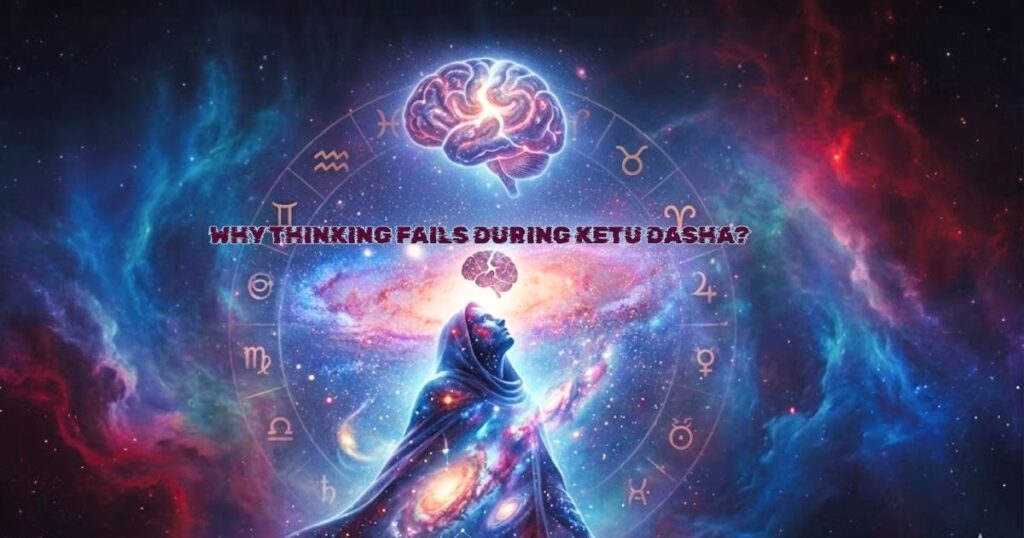
In Vedic astrology, Rahu and Ketu are shadow planets or the Lunar Nodes. Rahu is also called the North Node or the Dragon’s Head, while Ketu is called the South Node or the Dragon’s Tail. Though not real planets, both have a great influence on the human mind. So, Ketu is the ‘headless’ planet. Thus, it does not have the eyes to see nor the brain to process logical reasoning. One of the most common experiences during a Ketu period is confusion. This confusion is not without a reason. It forces a person to question long-held conventions. One of the most common experiences during a Ketu period is confusion. This confusion is not without purpose. It forces a person to question long-held assumptions. THE ‘HEADLESS’ KETU Ketu is symbolized as a headless serpent – acts without thinking or planning. Because it lacks a head, its influence is internal and intuitive, and it often circumvents the logical mind. Its dasha increases mental fog, creating confusion, illusions, scattered thoughts, and a sense of being lost. Ketu is beyond logic and rational thinking; instead, it relies on intuition. That is exactly what it does: it shifts the focus from logical thinking to intuitive abilities. All these reduce mental concentration, creating doubts and causing one to question their beliefs and decisions. KETU, THE ‘KARMIC’ PLANET: Ketu represents unresolved past-life karma. It carries the weight of the past. During its periods, it activates deep memories in the subconscious mind, bringing past life karma and wisdom to the surface. Because of that, the present life can feel confusing. The soul keeps looking back, while life asks it to move forward and learn something new. Ketu pushes you through confusion towards consciousness. THE ‘MOKSH KARAK’ KETU: Don’t forget Ketu is the Moksha Karak graha – the planet of liberation. It gives detachment. During its Dasha, the detachment nurtured by it reduces interest in materialistic goals and strategic planning. It doesn’t support the normal linear pattern of thinking or reasoning. It detaches individuals from materialistic goals and linear thinking, fostering isolation and a sense of void or loss of purpose, prompting them to let go of old beliefs, thoughts, and attachments. The confusion experienced during this time serves as a detoxification process, breaking down illusions and fostering spiritual growth and liberation (moksha). THE DEEPER PURPOSE OF KETU PERIODS: The real purpose of a Ketu period is to make a person realize that life cannot always be understood through logic or intellect alone. Ketu brings sudden changes, unforeseen turns, and moments that clear away illusion. Many of the beliefs and ideas you once held strongly may suddenly begin to feel uncertain. Old identities, thought patterns, and emotional habits begin to fall away. Things that once defined you may no longer feel relevant. This process can bring anxiety, restlessness, and a changed perception of reality, as buried thoughts from the subconscious rise to the surface. During this time, a person often stops looking for validation from others. There is less interest in following the crowd and more inclination to question everything. Thoughts that once felt perfectly truthful may suddenly collapse when faced with the stark reality that Ketu brings. Through this procedure, Ketu teaches an important lesson: the ability to let go, not just of possessions, but also of rigid beliefs and fixed viewpoints. Ketu Dasha periods often shake one up and wake him up to deeper truths about life. Gradually, it transforms the way one thinks, what one believes, and even the goals one has in life. This period quietly pushes the soul toward a higher purpose and ultimately toward spiritual liberation. HOW TO COPE WITH KETU DASHA CONFUSION: The very first step is to ACCEPT that logical thinking will be clouded during the Ketu periods. Stop thinking WHY? The more you think, the more you analyse, the more confusing it gets. And again, you end up feeling more LOST. Acceptance makes it easy for you to tackle this phase. You have to understand that this is not the time for rational thinking. Utilize this period to develop your intuitive skills and trust your inner voice to lead the way. Do not overanalyze your decisions; do not think too much about the future, and do not resist changes. Focus on the NOW and move ahead, taking small, deliberate steps forward. Consider that the Ketu periods are the ideal times to reflect on what truly matters and allow yourself to release outdated thoughts and patterns. Use this time to introspect and uncover hidden truths by exploring your subconscious mind. Ketu periods are detoxification times. Spend some time in and with nature, engage in spiritual practices such as yoga, meditation, and practice grounding exercises. All this will help you move from confusion towards clarity and, probably, a newer and upgraded version of yourself.
IS IT LOVE, ATTRACTION OR OBSESSION?
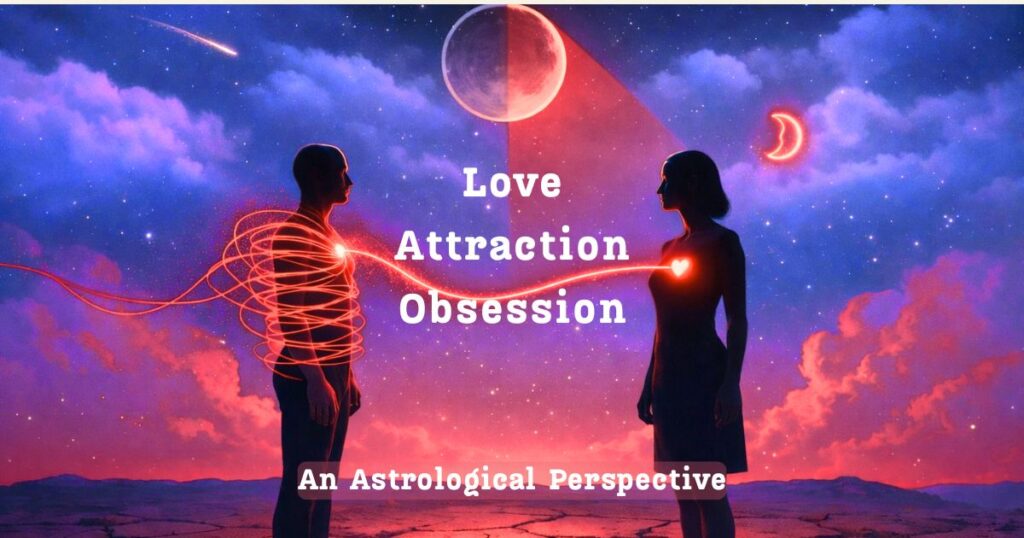
LOVE, ATTRACTION, OBSESSION: AN ASTROLOGICAL PERSPECTIVE Do you feel a specific kind of attraction that doesn’t feel like a choice; it feels almost like an emergency? You keep awake at night, keep checking your phone every few minutes, and keep tossing around thinking about him/her. You want to sleep, but can’t. There is a pang; there is a pain, which seems endless. You strongly feel you are in love. But are you? Venus, the ultimate maestro! Love, attraction or obsession – whatever the heart may desire – Venus is at the source. She weaves the threads of the heart, from the first tremors of the attraction that slowly brings two people together, to the warmth of love that grows stronger and deeper, up to the passion of an obsession. Is it true love or just an intense attraction? The answer isn’t in your head; it’s written in the movement of your stars. (Your birth chart holds the blueprint for these silent obsessions.) We know that Venus is the planet of love. When Venus is related to the 5th house or 7th house, it brings love in life and relationships. Love just happens. Venus brings attraction, affection, admiration and the ability to enjoy each other’s company. It brings peace and calmness. Mars is the planet of raw attraction. It represents desire, passion, energy, and the instinctive magnetism that pulls two people toward each other. When Mars’ burning passion meets Venus’ coy charm and allure, it creates a powerful chemistry, resulting in an attraction of the highest order. If Moon influences Venus, then it gives you a deeper feeling of emotional security; you feel safe and calm in the relationship. The influence of Jupiter on Venus brings understanding, trust, and longevity in the relationship. Rahu is the planet of obsession and insatiable longing. When it influences Venus, relationships feel like an uncontrollable addiction. They often begin with strong attraction and a sense of forbidden passion, but the intensity soon brings confusion and emotional chaos. When the 8th house lord is involved in love: The 8th house is the house of transformation, of upheavals, or crisis. With the involvement of the 8th lord in love, do not expect a light romance. The relationship is much, much deeper and transformational. You no longer remain the person you were! 8th house love changes you – for better or for worse! 8th house love generally starts suddenly. A casual meeting on the metro, exchange of looks at a party, running into someone at the elevator, etc. It hits you like a force at first sight. Things move quickly, and you feel it is the greatest Love Story ever. It feels so deep and urgent! It feels like an adrenaline rush. Love seems fated, karmic, and destined. The bond runs deep, but it also brings fear, vulnerability, and even emotional confusion. Over time, you may experience jealousy, dominance, power struggles, or control issues. You no longer enjoy it, but also find it difficult to detach from it. There is a kind of invisible pull, an obsession – you know which is not good for you, but yet, you cannot break away from it. And ultimately, without warning, the relationship comes to an end! You are devastated. Many times, the breakup, however painful, was destined to learn a karmic lesson. The role of Rahu (North Node) in love: The North Node/Rahu governs infatuation, attraction, excitement, and a love that feels larger than life. When Rahu influences your love/relationship, you get attracted to someone from a different culture, country, or a diametrically different mindset; or to someone much younger or older than you. The relationship is never ‘normal’; it is always ‘unconventional. Rahu is the Antenna; it creates an insatiable pull toward what we think we need. Ketu is the Axe; it represents the karmic baggage we haven’t processed yet. When these two collide in a relationship, it doesn’t create love; it creates a Loop. You fall in love with a person who may have all the vices you always hated. But somehow, this particular person attracts you. His meanness, his wickedness entice you. You may even know that the relationship may go nowhere, but the power of attraction far outweighs your logic. Rahu creates an illusion of love – a strong one. You believe that your partner is your soulmate, and you are completely obsessed with him/her. It is an addictive kind of love. It affects you more on the psychological level than on an emotional level. In reality, it is an overwhelming, uncontrollable attraction that you just cannot resist. Another symptom of Rahu’s involvement in love is that it amplifies desires, but abruptly. One day, your mind is consumed with longings, the other day, you do not feel anything. There are flashes of intense craving. This kind of love is forceful, possessive, and addictive. It blurs your power of reasoning and judgement. Even when you know something is wrong, you keep hoping that someday things will improve – despite the deception, the drama, and distressing conflicts. And then one day, the relationship breaks – as abruptly as it started! The Essence: Remember, real love just happens. It is a flow, a breeze of fresh air. There is no need to control, there is no hurry, there are no loud claims; only trust, peace, and understanding. It is to be lived with, not possessed or won. It is real with its share of difficulties, differences and doubts. But it surpasses all and STAYS!
MAHA SHIVRATRI – THE ECSTATIC NIGHT OF SHIVA
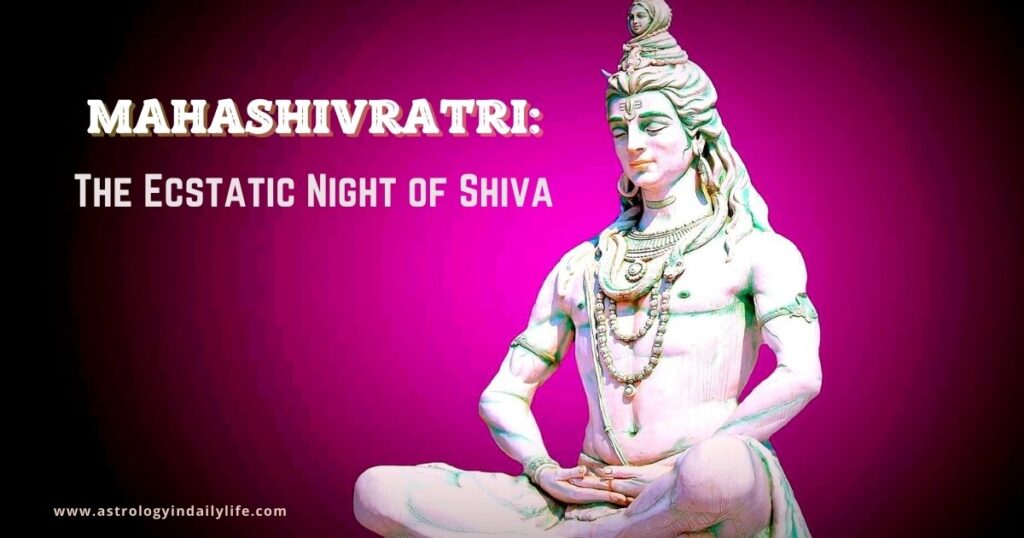
Maha Shivaratri literally means ‘The Great Night of Shiva”. Maha Shivaratri is celebrated in the Hindu month of Phalguna on the 13th lunar night (Trayodashi) transiting to the 14th lunar night (Chaturdasi). On this night, the Sun is in the Aquarius sign while Moon is in the Capricorn sign. The planetary positions are aligned in such a pattern on this auspicious night that it naturally invokes an upsurge of energy in the human structure. Being awake the whole night and meditating on Shiva’s name rejuvenates the devotees – physically, mentally and spiritually. Maha Shivaratri is observed the night before Amavasya i.e. the New Moon. Moon represents the Mind; this Mind keeps attracting and distracting us in different directions. On the 14th lunar night when the Moon’s Energy has its least effect on the Mind, it is an appropriate time to direct our energies inwards. This inward journey quietens and calms the mind and helps us connect to the ‘Shiva Tattva’ – the element of Shiva within us. Shiva is the very energy that administers and regulates the entire creation – within and without us. Maha Shivaratri is a celebration of spiritual significance and a cultural and cosmic event deeply rooted in Hindu mythology and tradition. Legend has it that on this auspicious night, Lord Shiva performed the heavenly dance of creation, preservation, and destruction, known as the Tandava Nritya. This divine dance symbolizes the cosmic cycles of life, death, and rebirth, highlighting the eternal rhythm of the universe. The Secret of remaining awake the whole night: Staying awake throughout the night symbolizes vigilance and awareness. It represents a heightened state of consciousness and mindfulness in which devotees remain fully present and engaged in their spiritual practice, whether through meditation, chanting, or prayer. This vigilance helps ward off ignorance and negative influences, allowing individuals to deepen their connection with the divine. In Hindu philosophy, the night symbolizes Tamas, one of the three Gunas or qualities of nature associated with darkness, ignorance, and inertia. By remaining awake and actively engaging in spiritual practices, devotees strive to overcome the influence of Tamas and cultivate qualities of light, knowledge, and dynamism associated with the other Gunas, namely Rajas and Sattva. According to Ayurveda, Vata imbalance is the root cause of most diseases. A person with balanced Vata is physically and mentally healthy; he is positive, active and calm. Maha Shivaratri is the night to balance the Vata in the body. The energies around us this night are most conducive to aligning the Cosmic Energy to regulate the excessive Vata. Sitting comfortably in Padmasana or Ardha-Sukhasana automatically keeps the spine erect. Performing anulom vilom pranayam – an ancient yogic breathing technique – in this pose helps balance and regulate the Vata energy in the body. Besides, this kriya also purifies the Energy Body – Sukshma Sharir and activates Higher Consciousness. Note: Do not forget to recite the Panchakshari Mantra 108 times after doing the Pranayam. Maha Shivratri Muhurat 2026: Here is the auspicious Muhurat for Maha Shivaratri – 2026 for Mumbai: Maha Shivaratri is on Sunday, February 15, 2026 Nishita Kaal Puja Time – 12:09 AM to 01:01 AM, February 16 What should you do during Maha Shivaratri? Maha Shivaratri is a very auspicious and potent night to start any Mantra Sadhna. It is also a promising time to initiate remedies for the fulfilment of desires or solving of problems. This is also a good occasion to apologize for your wrongdoings and free yourself from any guilt. Here is the list of things you can do on Maha Shivaratri: Start any health-related Mantra recitation such as Maha Mrityunjaya Mantra. This is the best time of the year to start wearing Rudraksha, Pearls and silver ornaments – especially for remedial purposes. If you are already wearing a Rudraksha, please energize it on the day of Shivaratri. It will become ten times more powerful. For childless couples: For the protection of pregnancy and to get a healthy child, the wife should wear Garb Gauri Rudraksha. For early marriage: Eligible boys and girls should wear the ‘Gauri Shankar Rudraksha’ on Mahashivaratri. It is also a good time to install a Parad/Mercury Shivling (for health) or Sphatik/Crystal Shivling (for wealth and prosperity). People with weak Chandra/Moon should perform Mahashivratri Pooja or at least meditate on Lord Shiva on this night. Those troubled by malefic Shani/Saturn or Pitru/Kaal Sarpa/Manglik/ Grahan Dosha should do appropriate remedies on this day. People suffering from Kaal Sarpa Dosh should fast and light up an Akhand Diya (Eternal Lamp) followed by Rudrabhishek. Shiv Aradhana or Shiva Meditation is the most effective and powerful remedy to calm down Rahu and Ketu. A very good remedy for Ketu is the reciting of Shiva Panchakshari Stotra: Na-Ma-Si-Va-Ya. You can read and contemplate on scriptures related to Lord Shiva, such as the Shiva Purana, Linga Purana and Rudram Chamakam, to deepen your understanding and connection with His divine attributes and teachings. You can perform Rudrabhishekam, a special ritual where Lord Shiva’s lingam or idol is bathed with various sacred items like water, milk, yoghurt, honey and ghee while chanting Vedic hymns and mantras dedicated to Lord Shiva. SHIV MANTRAS & THEIR BENEFITS: Basic Shiva Mantra: A very powerful Mantra that enhances your abilities and raises the intellect to the optimum levels. Panchakshara Stotra: The ‘Panchakshara’ literally means “five letters” in Sanskrit and refers to the five holy letters Na, Ma, Śi, Vā and Ya. The human body is made up of five elements and these five letters represent these elements. Na – Prithvi Tattva (Earth element), Ma – Jal Tattva (Water factor) Si – Agni Tattva (Fire