
Significance And Simple Remedies Of Chaitra Navratri
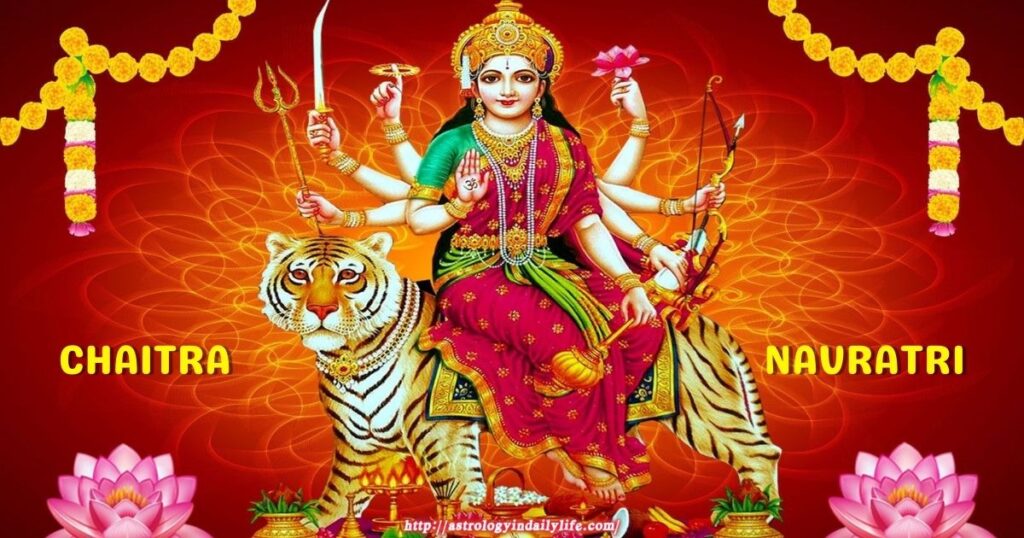
Chaitra Navratri is a significant Hindu festival that marks the beginning of the Hindu New Year. This Navratri, also called Vasant Navratri marks the beginning of the spring season. Chaitra Navratri is mainly observed in the northern and western parts of India. COSMIC ALIGNMENT: Chaitra Navratri unfolds during the Chaitra month of the Hindu lunar calendar, typically falling in March or April, marking the beginning of spring. Astrologically, this period holds immense importance as it aligns with the transition of the Sun into Aries, the first sign of the zodiac, symbolizing new beginnings, vitality, and courage. Aries, ruled by Mars, symbolises the fiery energy required for spiritual awakening and conquest over inner demons. THE POWER OF NINE: Navratri spans nine days and nights, each representing a distinct facet of the Goddess’s divine attributes. At the heart of Chaitra Navratri lies the worship of the divine feminine in her various forms as Goddess Durga, Lakshmi, and Saraswati. From Shailaputri, the embodiment of purity and strength, to Siddhidatri, the bestower of spiritual powers, these nine forms encapsulate the cosmic forces that govern the universe. In astrology, the number nine holds profound significance, representing completion, fulfilment, and attainment of spiritual enlightenment. During Chaitra Navratri, devotees immerse themselves in prayers, fasting, and meditation to harness the potent energies permeating the cosmos. In 2025, Chaitra Navratri begins on March 30 and ends on April 07. Here are some things that make Chaitra Navratri special: Glorification of Feminine power: Chaitra Navratri celebrates the strength, patience, resilience and importance of feminine energy in the universe. Goddess Durga is the epitome of feminine power. People worship her with full fervour and devotion all nine days of the Navratri. They perform Kanya Puja on the eighth day of Navratri, also known as Ashtami. Young girls – the embodiment of the goddess – are worshipped and given offerings Nine days of fasting and prayers: During Navratri, devotees observe fasts and offer prayers to the goddess Durga for nine consecutive days. They believe that fasting and prayers during this period help in purifying the mind, body, and soul. Celebration of Ram Navami: The ninth day of Chaitra Navratri is Ram Navami, which marks the birth anniversary of Lord Rama. It is a highly auspicious day for Hindus who celebrate it with great enthusiasm and devotion by offering prayers, performing puja, and singing bhajans. New Ventures: Chaitra Navratri is also an auspicious time to start new ventures and undertake important tasks. Many people wait for this time to start new businesses or make significant investments. Spiritual significance: Chaitra Navratri is an opportunity for spiritual growth and self-realization. It is a time to reflect on one’s actions and seek forgiveness for any wrongdoings. The festival brings peace, prosperity, and happiness to those who observe it with devotion and sincerity. Try these astrological remedies for auspicious Chaitra Navratri: Burn clove (Laung) and camphor (Kapur): Burning camphor brings positive energy to the house. Try to use pure camphor for burning. performing aarti of Maa with cloves and camphor for nine days in Chaitra Navratri helps eradicate poverty and improves financial conditions. Click here to know which form of goddess should YOU worship during Navratri. Offer Kheer to Maa Lakshmi: Mata Lakshmi is the goddess of wealth. If you pray for the happiness and prosperity of the house by offering rice kheer to Mata Lakshmi on Fridays during Navratri, then there will always be happiness and prosperity in your life. Perform Havan with mango wood: Havan marks the culmination of the nine days in Navratri. Havan performed with mango wood on Navami Tithi removes all the negative forces from your house making way for happiness and prosperity. Offer hibiscus flower to the Goddess: Red is the favourite colour of Maa Durga, especially red-coloured things. Offer 5 hibiscus flowers along with red chunri to the Goddess during Navratri. After Navratri, you can take these dried flowers and keep them at the place where you keep cash or wealth in the house. Importance of Cowries in Worship: Cowries represent wealth. For this reason, you should keep cowries at the place of worship. Place 7 cowries along with the Kalash during Kalash Sthapana in Navratri and apply vermilion on them. On the ninth day after the worship of Navratri ends, take out all the cowries, tie them in a yellow cloth and keep them in your cashbox or tijori. With this remedy, not only will you recover your stuck money, but also new sources of income will open up. Water Remedy: During Chaitra Navratri, keep a vessel filled with water in the east or north direction at the main door of the office. Add red and yellow flowers to it. This will give you success in your career and resolve the problems of unemployment and business if any. Mantras: During Navratri, one must recite the Navarna mantra “Om Ain Hree Klein Chamundayai Vicchai” as much as possible. Durga Saptashati must be recited at least once during the days of Navratri. PS: Offering Tulsi and Durva to Maa Durga is prohibited. To read about the various NAVRATRI MANTRA REMEDIES, click HERE.
ALL YOU WANTED TO KNOW ABOUT NAVRATRI
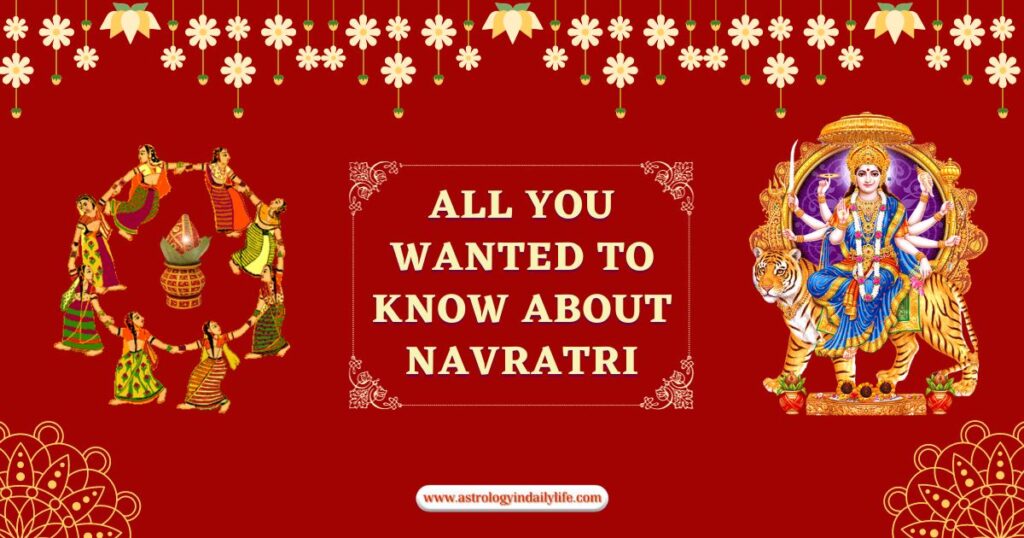
Navratri means the nine nights of vibrant worship, music that echoes in the soul, and a spectacle of colours that illuminates the darkest nights. Navratri, which translates to “nine nights” in Sanskrit, is not merely a festival; it’s a grand carnival of spirituality and cultural splendour. Join me on a fascinating journey through the enchanting realms of Navratri to learn about the significance, rituals, dos and don’ts, celebrations, and more. Sharadiya Navratri: 2025 Shardiya Navratri starts on Monday, September 22, 2025, and will continue till the Dussehra celebration on Thursday, October 02, 2025. Besides, Goddess Durga arrives on an elephant this year. The Visarjan (immersion) of the idol of Maa Durga will be on Vijayadashami, i.e. on 02 October 2025. Nine Nights – Three Dimensions The nine days of Navratri are a symbolic journey. In the first three days, the focus is on overcoming laziness and inertia (Tamas). The next three days are about controlling and overcoming our desires and passions (Rajas). Finally, the last three days are dedicated to maintaining our minds in a state of purity and wisdom (Sattva). Thus, the nine days are an opportunity to recharge our energies. For the first three days, we worship Maa Durga, seeking her strength. Then, we turn our attention to Maa Lakshmi, symbolizing wealth and prosperity, for the next three days. Finally, we invoke Maa Saraswati, representing knowledge and wisdom, during the last three days of Navratri. The tenth day of the festival marks Vijayadashami, also popularly known as Dussehra. The three goddesses are the incarnations of Shakti, the mother goddess. Each goddess signifies different aspects of life, guiding us toward a balanced and harmonious existence. Colours of Navratri Each day of Navratri is associated with a specific colour, and devotees wear clothes of that colour to celebrate the festival. The colours may vary based on different traditions and regions, but generally, the colours for the nine days of Navratri are: Day 1 (Pratipada): Grey Day 2 (Dwitiya): Orange Day 3 (Tritiya): White Day 4 (Chaturthi): Red Day 5 (Panchami): Royal Blue Day 6 (Sashti): Yellow Day 7 (Saptami): Green Day 8 (Ashtami): Peacock Green Day 9 (Navami): Purple Ghatasthapana Kanya Pujan Kanya Puja, also known as Kanjak Puja, is a ritual on the eighth (Ashtami) and ninth (Navami) days of Navratri. It is a way of honouring the divine feminine energy and acknowledging the power of Maa Durga. The rituals include washing their feet, tying a red sacred thread (mauli) to their wrists and a tilak to their foreheads. Then touch their feet and seek the Goddess’s blessings through them. During the ritual, devotees welcome nine girls into their homes and offer presents and tasty bhog prasad to them. Special bhog dishes (kanjak) include poori, chana, sheera/halwa, sweets and kheer, while gifts include new dresses, bangles and money. Fasting/Vrat Fasting during Navratri is considered a way to purify the body and soul, enhance spirituality, and build self-discipline. Types of Fasting: There are different ways people observe fasts during Navratri. Some people abstain from all kinds of food and consume only water or fruits for the entire duration. While others opt for a diet that excludes certain foods like grains, non-vegetarian items, onion, and garlic. Use rock salt instead of common salt for cooking. Foods Allowed: One can have fruits, milk, yoghurt, and specific flours like buckwheat flour (kuttu ka atta) or water chestnut flour (singhara atta), nuts, seeds, dry fruits and coconut. Moreover, you can prepare simple dishes like Sabudana Vada, Sabudana Khichdi, Singhare ka Halwa, Kuttu Ki Poori, Singhare Ke Pakore, as well as sweet potato, arbi (colocasia), and yam (suran). Foods to Avoid: Grains like wheat, rice, and oats, and lentils like dals and pulses, Non-vegetarian foods, onion, garlic, ginger, and certain spices like turmeric, cumin, and mustard. Breaking the Fast: The fast is normally broken in the evening with a special meal called “prasad” that is offered to the Goddess first and then consumed. What to do during Navratri? Navratri Celebrations North India: In North India, Navratri celebrates the triumph of lord Rama over Ravana and Rama’s homecoming to Ayodhya after fourteen years of exile, along with his wife Sita and brother Lakshmana. People in UP and Bihar celebrate Navaratri with the Ramleela– a dramatic enactment of the life of Lord Ram from the Hindu epic Ramayana. East India: In West Bengal and the North-East, Navratri is known as Durga Puja. People celebrate goddess Durga’s triumph over Mahishasura. Durga Puja marks the homecoming of goddess Durga from Kailash Parvat to her maternal house. Devotees offer prayers in the evening and perform a dhunuchi naach, a special dance with earthen lamps. Dancing to upbeat dhak (a large drum) beats, hopping from one pandal to the next, munching on lip-smacking bhog prasad and adorning yourself with beautiful, traditional attire is a must-do during Durga puja in West Bengal. West India: In West India, especially in Gujarat, people celebrate Navratri with a lot of enthusiasm and verve. The women who are fasting dedicate their prayers to an earthen pot called garbo lit with diyas (lamps). These colourful pots represent the source of life and the light represents shakti (power). People dress in colourful traditional attire and participate in energetic traditional Garba and Dandiya Raas dances. South India: The South Indian way of celebrating Navratri is more spiritual and artistic. In Tamil Nadu, one of the significant aspects of Navratri is the Golu display. Golu is an exhibition of various dolls and figurines depicting gods, goddesses, and other themes. Devotees also perform Ayudha Puja wherein they worship Agricultural implements, tools, books, musical instruments, machinery and automobiles. In Telangana, women arrange colourful flowers in the form of a cone and offer prayers to Goddess Bathukamma, seeking her blessings for health and prosperity. In Karnataka. Yakshagana, a night-long dance in the form of epic dramas from the Puranas, are enacted during the nine nights of Navratri. The people of Kerala give prominence to Goddess Saraswati, the Goddess of