

UNDERSTANDING THE SIGNIFICANCE OF NAVRATRI

The uniqueness of Hindu festivals is that they are all related to some or the other significant astronomical events or changes. Navratri is not an exception to this rule. The nine nights of Navratri help us tune with our creative energies and rejuvenate ourselves, both physically and mentally. NAVRATRI MARKS THE CHANGE OF SEASONS: The change of seasons in a year is directly connected to both the Equinoxes and the Solstices. Equinoxes and Solstices are astronomical events that mark the sun’s apparent movements in the sky. The Summer Solstice marks the time when the Sun reaches the highest point in the Northern sky. Winter Solstice marks the movement of the sun to the lowest point in the Southern sky. Equinoxes are the periods when the plane of the Earth’s equator is in line with the centre of the Sun’s disk. There are two Equinoxes in a year, in March and September. Days and nights are generally of equal duration then. The two Solstices occur in June and December. Correspondingly, there are four Navratris celebrated in India: Chaitra or Vasanta Navratri (March-April) marks the beginning of the summer season. Ashadha Navratri (June-July) marks the beginning of the monsoon season. Sharada Navratri (September-October) marks the beginning of the winter season. Pausha/Magha Navratri (January-February) – marks the beginning of the autumn season. Of these, the Chaitra/Vasanta Navaratri and Sharada Navaratri are observed and celebrated by the householder and spiritual seekers alike. Ashadaha Navratri and Pausha/Magha Navratri are known as Gupt (Secret) Navratris – these are largely observed by people who perform Tantra Vidya or seek to obtain Siddhis (psychic powers) or the Shaktas (Devotees of Goddess Shakti). Of the four, the Sharada Navratri (also known as Maha Navratri) is celebrated with much gusto and fervour by all. These four periods are the focal points of change. They mark the end of what is old, spent, and harmful and the birth of something new. One can also see this as a period of retrospection, rejuvenation and rebirth on all three planes viz physical, mental & spiritual. This is the time to bring everything into balance. “Which Devi Maa should you worship this Navratri?” – Read here. PHYSICAL REJUVENATION: Equinoxes and the Solstices mark the transition period between two seasons. This is the time when bacteria thrive and viral infections/diseases are at their peak. At the same time, the body needs time to adjust to the changes in the climate and environment. Excessive and wrong eating habits, disturbed sleeping patterns and the onslaught of the climate result in low immunity and create an imbalance in the body by disturbing the three bio elements – Vata (Gas), Pitta (Bile) and Kapha (Phlegm). Detoxification: Navratri is the right time to detoxify and revitalize the body by balancing these three humours. Fasting is an essential part of the Navratri celebrations. Some people have only one meal a day. Most of them, however, abstain from certain high-energy foodstuffs and have only selected food items. Meat, grains, alcohol, onion, garlic, etc., are totally avoided; so are processed foods. The emphasis is on gluten-free grain alternatives, fresh fruits, yoghurt, etc., which are easy to digest. The Nine Goddesses – symbols of the Divine Energy – are invoked to help control and cleanse the nine openings of the physical body: 2 Chakshu (Eyes), 2 Karna (Ears), 2 Nasika (Nostrils), 1 Vadana (Mouth), 1 for Malotsarjan – Anus & 1 for Mutrotsarjan – Urinary opening. MENTAL REJUVENATION: Navratri is also the period of cleansing the mind of the nine evil forces – काम – lust क्रोध – anger लोभ – greed मोह – delusion अहंकार – ego ईर्ष्या – jealousy संशय – doubt राग – attachment द्वेष – hatred Fasting also has psychological benefits that include strengthening one’s willpower and removing emotional blocks. This is the time when one reflects inward. Self-control and discipline help to rid the mind of its impurities and nurture noble values. SPIRITUAL REJUVENATION: Mental control coupled with control over physical urges helps elevate one’s spiritual status. People involve themselves in spiritual practices such as meditation, pranayama, etc. The worship of all the forms of AdiShakti (Primal Energy) helps us destroy our basic, gross carnal tendencies and invoke the Divine Power within ourselves. This is the time for recharging one’s latent energies and activating one’s progress to the transcendental world. WHY THE EMPHASIS ON ‘NIGHTS’? Navratri is a festival of nine ‘nights’. There is a reason for this. Indian scriptures mention that “रात्रि रूपा यतोदेवी, दिवा रूपो महेश्वर”. Meaning that Shiv represents daytime, while Shakti is active during the nighttime. Shiv and Shakti are one; so also a day and night represent one complete day. The day is full of activity, while the silence of the night is the appropriate time to invoke and recharge energies. Hence, worshipers of the Feminine Primal force always choose the nighttime to worship the Devis – the Goddesses. Click here to read about the various NAVRATRI MANTRA REMEDIES.
RUDRAKSHA – THE MIRACLE BEADS
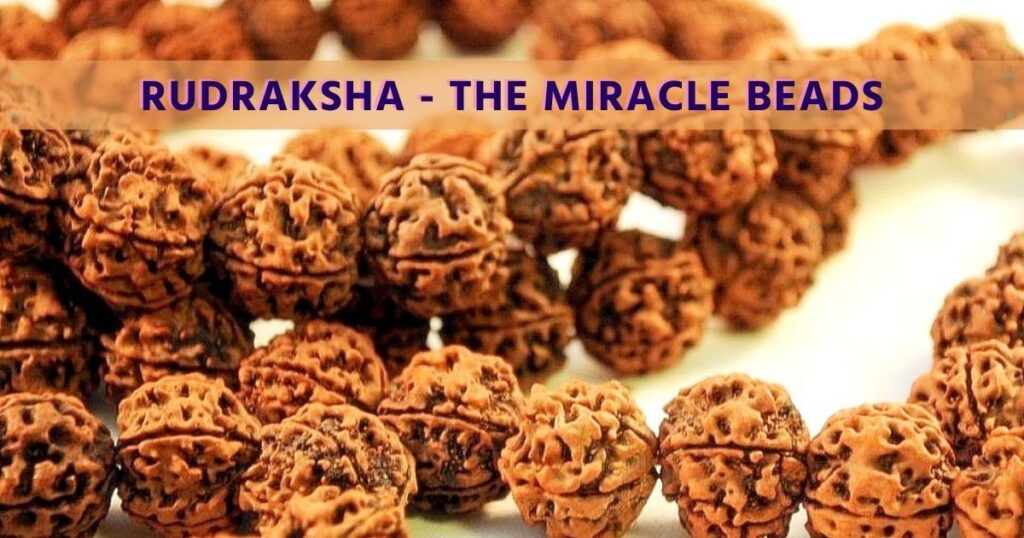
Rudraksha has been used in India since times immemorial for its therapeutic, medicinal, astrological and spiritual significance. Rudraksha actually refers to the seed of the tree which goes by the same name. The scientific name of Rudraksha is Elaeocarpus ganitrus. There was a time when these beads were very popular in India – people of all ages, sex and groups wore them in the form of malas and bracelets. In one of the best-known research papers published by Dr. Subhas Rai of the prestigious IIT, Banaras, Dr. Rai has confirmed that Rudraksha beads have potent electromagnetic, paramagnetic and inductive properties. These very properties endow healing powers to the beads. Uniquely, there are no do’s and don’t’s for wearing a Rudraksha bead or mala. Anyone can wear them – irrespective of age, sex, religion, caste or creed. Similarly, one can wear it all the time. For safety purposes, one may remove it while sleeping (to prevent cracking) and bathing (if using chemical soaps and shampoos). Benefits of Rudraksha: Rudraksha beads provide a kind of protective cocoon to the wearer and safeguard them from various adverse circumstances and negative energies they may come across in their daily lives. For this reason, the wandering sadhus, sanyasis and travellers wear these beads. It is not only an antacid, anti-inflammatory, anti-arthritic, anti-gout, antioxidant but is also a muscle relaxant and anti-depressant in properties. Hence the body of a regular wearer remains free from diseases. The beads are helpful in stabilizing blood pressure. It also regulates heartbeats. It reduces headaches and is beneficial in treating mental disorders. Moreover, it is possible to control and manage Epilepsy too with the help of Rudraksha. Wearing Rudraksha on the arm also helps in preventing a paralytic attack. Tying a cord or thread containing 3 to 5 Rudraksha on the waist helps in alleviating back pain. Similarly, it also helps in calming the mind and increasing concentration. It is very useful for those who are suffering from hypertension or depression. Some particular beads have the power to revive stagnant business, acquire much-deserved promotions and bring all-around success. Wearing a Rudraksha Mala bestows one with Riddhi, psychic powers and prosperity. Moreover, the beads also reduce the adverse effects which malefic planets indicate in a horoscope. It helps to increase willpower and nurtures the mind to align itself to positivity. Besides, it calms the movement of energy in the Chakras and gives a tranquil feeling of peace. In addition, these beads confer freedom from past karmas. It opens the heart and mind to superior wisdom; thereby unravelling one’s purpose in life more clearly. Note: The Rudraksha tree is of Indonesian and Nepalese origin. It somehow found its way to India and flourished well in the hilly regions of Uttaranchal. One can visit their orchard which was developed and managed by Shri Shivdas Moolchand Khatri. This farm is situated on the Dehradun-Mussoorie road behind the Shri Prakasheshwar Temple. To read more about Rudraksha Remedies, click HERE.