

GURU PURNIMA: THANKSGIVING TO THE DIVINE MASTERS

Explore the transformative power of Guru Purnima, diving into its profound meaning, celebrating its significance, and discovering potent remedies for spiritual growth.
The Wealth Astrology Guide To Help You Get Rich.

We all have heard the famous quote: ‘Money is not everything but everything needs money.” One of the four aims of human life in Indian philosophy is Artha meaning acquisition of wealth and financial security. Goddess Lakshmi is the goddess of wealth, fortune, luxury, material fulfilment and contentment. She has been described as चंचला meaning unsteady and चपला meaning swift or restless. This indicates the unpredictable and inconsistent nature of wealth. Here, I shall analyse the role of Astrology in determining the financial status of a person and how it can help in overcoming monetary problems. Which house in astrology is for money? In astrology, conventionally four houses are very important to consider the financial status of a person, viz the 2nd, 5th, 8th and 11th houses. 2nd house shows one’s personal assets, savings and economic growth. This house hints at how the money will be earned. 5th house is for sudden gains and gains through speculation, lottery, etc. 8th house indicates personal assets accumulated through partnership and/or marriage, hidden deals, inheritance, etc. 11th house is for one’s personal assets accrued through self-efforts, business and career. This house indicates huge gains and high bracket income. The 9th house is also important as it is the house of luck and prosperity. It decides how fortune will treat you. In fact, the 5th and 9th houses are considered the houses of wealth (Lakshmi Sthana). The main Houses indicating financial issues such as debts, loans, losses, etc are the 6th, 8th, 11th & 12th Houses. Which planets are associated with money? The main planets associated with money are: Venus: Since Venus is the natural ruler of the 2nd house, its position is very important. The placement of Venus in a chart can reveal a lot about your ability to attract money. If placed in the 2nd or 8th house, it will give you substantial wealth. A weak Venus gives financial problems. Jupiter: Jupiter is the planet of fortune, luck, richness and expansion. Jupiter, if in the 2nd or 8th house, gives money through multiple and unexpected sources. Saturn: Saturn provides permanency and long-term potential to earn and retain wealth. Its placement in the 2nd or 8th house gives opportunities to earn money in a foreign land and helps in increasing savings. Mars: Mars in the 2nd house provides the energy and drive to earn money and gain wealth. While Mars in the 8th house gives unearned gains. However, it also makes one spend impulsively. Uranus (sudden wealth) and Pluto (God of Riches) with auspicious aspects from Venus and/or Jupiter can bring copious wealth. Some important planetary placements and combinations in the horoscope for wealth: A person with a strong placed Jupiter will never be empty-handed. A strong Moon too makes a person affluent. Moon+Mars conjunction also called ‘Laxmi Yoga’ blesses a person with wealth and fame. Uranus aspected by Venus gives sudden, unexpected wealth such as winning a lottery. People with a Venus-Jupiter connection in their horoscopes – be it by conjunction or aspect, never face any scarcity of money in their lives. Any connection between the 2nd lord and the 11th lord through placement, conjunction or aspect indicates enormous wealth. In fact, this is a very strong wealth-producing combination. It bestows the native with multiple gains. Sun in the second house of the horoscope can make a person a millionaire. A person with 2nd lord placed in the 5th house earns wealth through his wisdom and creativity. A person with 2nd lord in the 4th house is blessed with all kinds of comforts and luxuries. 5th lord in the 10th house or the 10th lord in the 5th house gives abundant wealth. The conjunction of the 5th and 9th lords or 9th and 10th lords also is a good combination for wealth. The presence of the 9th lord in the 11th house makes a person lucky in matters of wealth. If the 10th lord is placed in the 1st or 2nd house, the native’s wealth will keep increasing with time. If the 11th house contains or is aspected by auspicious planets, the native will never be short of money in his life. Rahu in the 11th house gives substantial gains without much sweat. The placement of Venus in the 12th house of the horoscope ensures a luxurious life. At the same time, the native should be careful when taking loans for their extravagant expenses. If there is any parivartan/exchange between the 2nd lord with the 5th lord or the 11th lord, the person earns a lot of money. It is essential that the above placements and combinations are not aspected or impacted by malefic planets. Now, let us discuss some remedies related to wealth. Remedies to attract wealth: “Kubera” is the god of wealth and the direction of Kubera is North. Hence place the locker in the North zone of the house. Keep the cash locker/cupboard adjacent to the south wall of the house such that it opens in the north direction. Do not take anything free of cost nor offer any of your services free of cost. Always make sure that you pay/receive some monetary compensation. Take a small piece of Parijat root and 11 white gunja seeds. Place them together in a small silver case or locket. Wear this locket to attract sudden wealth. If your income is unsteady or irregular, do this remedy. : Starting from the first Saturday of Shukla Paksha (bright period of phases of the moon), start distributing poori – sabji to the poor for 11 consecutive Saturdays. This will ensure a steady and continuous flow of income. Never return home empty-handed. Always get something – be it a flower or fruit or some snack. Never keep nor use any broken vessels in the house. Practical Remedies to get rid of finance-related problems: Salt remedy: If financial problems trouble you despite your great efforts, then do this remedy. Keep salt in a clay vessel in the northeast direction of your house. Keep changing the
Significance And Simple Remedies Of Chaitra Navratri
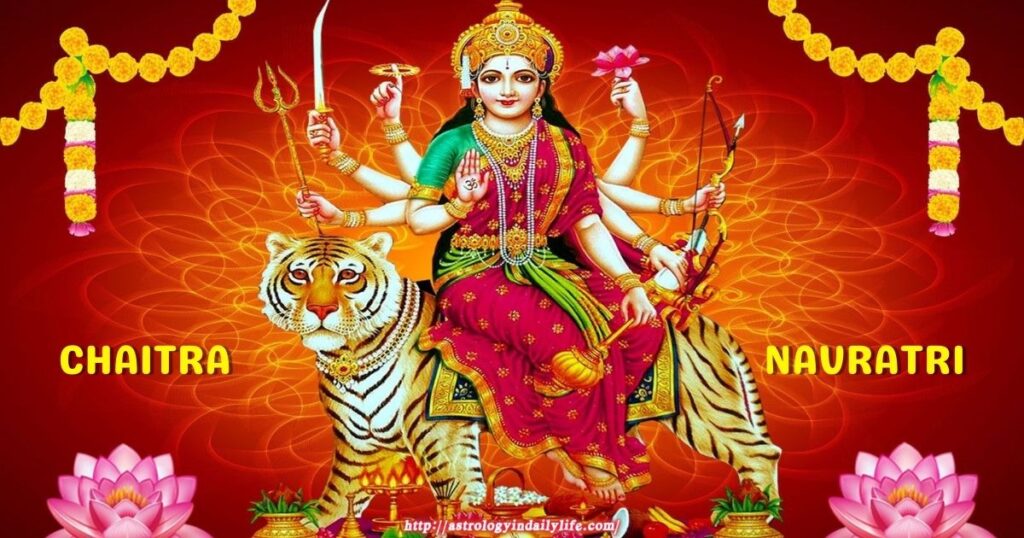
Chaitra Navratri represents more than a seasonal changeover; it is the spiritual and astrological beginning of the Hindu New Year. Also known as Vasant Navratri, this nine-night period coincides with the arrival of spring, signalling a profound shift in both the natural world and the cosmic order. COSMIC ALIGNMENT: The timing of Chaitra Navratri is calculated by the lunar calendar, typically falling between March and April. From an astrological perspective, this period is exceptionally powerful. It coincides with the Sun’s transit into Aries, the first sign of the zodiac. Aries is governed by Mars, a planet embodying courage, vitality, and new beginnings. This alignment provides the fiery energy required for spiritual awakening and the psychological strength to overcome internal demons. THE POWER OF NINE: Navratri spans nine days and nights, each dedicated to a specific manifestation of the Divine Feminine. At the heart of Chaitra Navratri lies the worship of the divine Shakti in her various forms as Goddess Durga, Lakshmi, and Saraswati. From Shailaputri, the core energies of strength, prosperity, and wisdom. In Vedic Numerology, the number nine represents “Purnatva” or completion and fulfilment. The journey from Shailaputri (symbolising foundational purity) to Siddhidatri (the bestower of spiritual perfections) mirrors the soul’s evolution toward enlightenment. In 2026, Chaitra Navratri begins on March 30 and ends on March 19. What makes Chaitra Navratri special: Several pillars of devotion characterise the festival: Glorification of Feminine Power: Chaitra Navratri celebrates the strength, patience, resilience and importance of feminine energy in the universe. Goddess Durga is the epitome of feminine power. People worship her with full fervour and devotion all nine days of the Navratri. This culminates in Kanya Puja on the eighth day (Ashtami), where young girls are worshipped as living embodiments of the Goddess. Nine days of fasting and prayers: During Navratri, devotees observe fasts and offer prayers to the goddess Durga for nine consecutive days. The fasting and prayers are intended to detoxify the mind, body, and spirit, creating a vessel for higher consciousness. Celebration of Ram Navami: The final day of Chaitra Navratri is Ram Navami, which marks the birth anniversary of Lord Rama. It is a highly auspicious day for Hindus who celebrate it with great enthusiasm and devotion by offering prayers, performing puja, and singing bhajans. New Ventures: Chaitra Navratri is also an auspicious time to launch business ventures or make significant financial investments. Spiritual significance: Chaitra Navratri is an opportunity for spiritual growth and self-realisation. It is a time to reflect on one’s actions and seek forgiveness for any wrongdoings. The festival brings peace, prosperity, and happiness to those who observe it with devotion and sincerity. Try these astrological remedies for auspicious Chaitra Navratri: Burn clove (Laung) and camphor (Kapur): Burning pure camphor (Kapur) with cloves during Aarti is a powerful method to clear stagnant energy and improve the financial atmosphere of a household. Click here to know which form of goddess you should worship during Navratri. Offer Kheer to Maa Lakshmi: Mata Lakshmi is the goddess of wealth. If you pray for the happiness and prosperity of the house by offering rice kheer to Mata Lakshmi on Fridays during Navratri, then there will always be happiness and prosperity in your life. Perform Havan with mango wood: Havan marks the culmination of the nine days in Navratri. Havan performed with mango wood on Navami Tithi neutralises all the negative forces from your house, making way for happiness and prosperity. The Hibiscus Remedy: Red is the preferred colour of Maa Durga. Offering five red hibiscus flowers with a red chunri is highly auspicious. Once dried, these flowers can be kept in your treasury or cash box to maintain positive financial flow. Importance of Cowries in Worship: Cowries represent wealth. To resolve stuck finances or open new income streams, place seven vermilion-stained cowries near the Kalash during its establishment. On the final day, tie them in a yellow cloth and place them in your safe. With this remedy, not only will you recover your stuck money, but also new sources of income will open up. Water Remedy for Career: During Chaitra Navratri, keep a vessel filled with water in the east or north direction at the main door of the office. Add red and yellow flowers to it. This assures success in your career and resolves the problems of unemployment and business, if any. Mantras: During Navratri, one must recite the Navarna mantra “Aum Ain Hree Klein Chamundayai Vicchai” as much as possible. Durga Saptashati must be recited at least once during the days of Navratri. PS: Offering Tulsi and Durva to Maa Durga is prohibited. To read about the various NAVRATRI MANTRA REMEDIES, click HERE.
VASANT PANCHAMI – AMAZING MYTHS, RITUALS AND MANTRAS
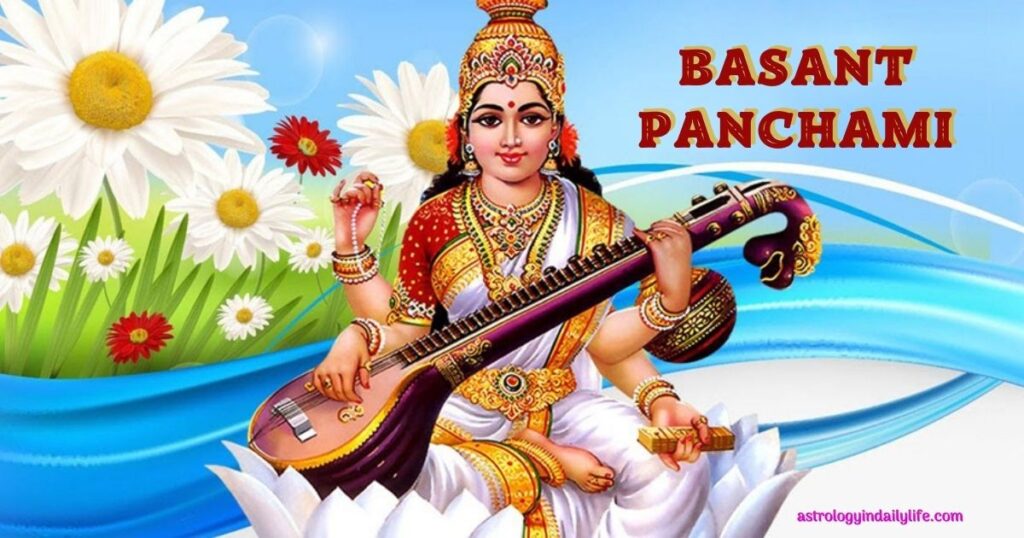
This year, Basant Panchami will be celebrated on Wednesday, 14th February. Basant Panchami Pooja Muhurat: 07:08 AM to 12:53 PM (Total Duration = 5 Hours 45 Mins) Basant Panchami marks the end of winter and welcomes spring. There is a saying in Punjab “आई बसंत पाला उडंत” (Ayi Vasant aur pala udant) meaning that with the arrival of spring (Vasant) season, cold (Pala) flies off. Let us discover how people celebrate Basant Panchami and what is its significance. BASANT PANCHAMI CELEBRATIONS IN DIFFERENT STATES: The uniqueness of Indian festivals is that most of them indicate the beginning of a season or a month of the Hindu calendar. Vasant Panchami is one such festival that occurs on the fifth day of the bright half of the Magha (sometime in early February) month. Thus, it marks the advent of the Spring season. ‘Vasant’ or ‘Basant’ means ‘Spring’; while ‘Panchami’ means ‘occurring on the fifth tithi (date)’. Spring is a season of hope, rebirth, regeneration, regrowth, and rejuvenation. Consequently, people celebrate the arrival of this season with much joy, delight and enthusiasm all over India. Muslims too celebrate Basant Panchami as ‘Sufi Basant’ in Sufi shrines. Besides, in Punjab and other North Indian regions, they celebrate it as the ‘Basant Festival of Kites’. At Amritsar’s Harmandir Sahib (Golden Temple), the Sikhs initiate singing of the Basant Raga on this day which continues till the first day of the Vaisakha month (sometime in April/May). In the state of Bihar, farmers celebrate it as the ‘Harvest Festival’, and as ‘Siri Panchami’ in West Bengal. Even in Uttarkashi, it is a ‘farmer’s festival’ where the farmers offer prayers to Mother Earth and the crops besides following other rituals related to agriculture and harvesting. The shrine of the Sun God in Aurangabad district, Bihar known as the Deo-Sun Shrine, was established on Basant Panchami. Hence devotees adorn the statues with new red clothes on this day. Furthermore, on this day, the priests of the Shri Banke Bihari temple of Vrindavan signal the start of Holi celebrations by tossing Abeer and Gulal on devotees. Also, the famous Shah Bihari temple in Vrindavan opens the ‘Basanti Kamra‘ (The Yellow Room) for devotees. The entire room is yellow in colour. The ceiling and the walls have multicoloured paintings of Radha and Krishna. ORIGIN AND SIGNIFICANCE OF BASANT PANCHAMI: Since early times, Vasant ritu – the Spring Season – has been considered as ‘Rituraaj’ – the king of all seasons. And this is not without its reasons. Vasant is the time when Nature presents herself in her most beautiful and flourishing form. It is the season when fragrant flowers like bela, chameli, juhi, (varieties of Jasmine) etc. bloom in abundance; flowers like raat-rani (‘night jasmine) blossom at night. The air is fragrant with invigorating scents; particularly the faint aroma of the Mango blossoms conquers the senses. The most attractive sight is that of the yellow and green mustard fields in full bloom. Not surprisingly, YELLOW is the predominant colour of this season. ‘Basanti’ is another name for the colour yellow. It symbolizes enlightenment, prosperity, dynamism and optimism. People wear bright yellow clothes – the colour of the mustard flower that indicates the onset of spring and marks the day with music, dancing, and kite-flying. Devotees offer yellow flowers to Goddess Saraswati and apply a yellow (turmeric saffron) tilak on their foreheads. They even prepare yellow-coloured delicacies like kesar halwa, kesari bhaat (yellow rice), boondi laddoo and maalpuas. This festival celebrates the liveliness and vibrancy of nature after autumn; it symbolizes the end of the days of darkness viz ignorance and awakening into the spirit of Spiritual enlightenment. LEGENDS REGARDING BASANT PANCHAMI: In the early times, Vasant Panchami was more a festival of joy, of celebration of love and a symbol of enjoyment and gaiety. Kamadeva, the God of Love and his consort, Rati are still worshipped in many regions of India on this day. In fact, Vasant Panchami initiates the spring festive cycle which culminates with the celebration of Holi. This 40-day period between Vasant Panchami and Holi corresponds with the 40 days of Rati’s (Kamadeva’s wife) remorse after her husband, Kamadeva was reduced to ashes by Lord Shiva for disturbing his meditation with his love arrows. Basant Panchami is celebrated very enthusiastically by the Krishna Bhaktas (devotees) and followers too. They consider it like the reverence of ‘Divine Desire’ which flows from their heart for their beloved, Krishna. It marks the beginning of the season of Love and fulfilment of desires. It is also believed that Lord Brahma, the Creator of the Universe, created Goddess Saraswati on this very day to rid the Earth of its dullness and quietness. Hence, Vasant Panchami is celebrated by many as Goddess Sarasvati’s birthday or day of appearance. SARASWATI PUJA: SARAS means EASY and WATI mean FLOWING. So Goddess Saraswati is a symbol of knowledge that flows easily to anyone who is willing, capable and ready to receive it. One of the many names of Goddess Saraswati is ‘Vakdevi” – the Goddess of Speech. Another name is Veena Vadini (One who plays the Veena – Harp) and Vaani Daayani – Giver of Speech. She is the personification of all kinds of Knowledge, Speech, Eloquence, Wisdom and all Art forms. Hence students and artists worship Her on this day. Educational institutes organise special worship of Goddess Saraswati. Students and devotees place stationery and musical instruments, etc. before Her and worship them along with the Goddess to invoke Her blessings. Vasant Panchami is a three-day festival where people worship Goddess Saraswati and pray for blessings of knowledge and to get rid of laziness and ignorance. The ritual of initiating learning to children – Vidya Arambham or Abhyasa Arambham – is one of the important rituals of Vasant Panchami – as it is an auspicious day to begin a child’s education. The ritual consists of writing the Beej Mantra of Goddess Saraswati “Aiyang” (ऐं) on the tongue of the kids as the first syllable of education with Saffron. Grown-ups
UNDERSTANDING THE SIGNIFICANCE OF NAVRATRI

The uniqueness of Hindu festivals is that they are all related to some or the other significant astronomical events or changes. Navratri is not an exception to this rule. The nine nights of Navratri help us tune with our creative energies and rejuvenate ourselves, both physically and mentally. NAVRATRI MARKS THE CHANGE OF SEASONS: The change of seasons in a year is directly connected to both the Equinoxes and the Solstices. Equinoxes and Solstices are astronomical events that mark the sun’s apparent movements in the sky. The Summer Solstice marks the time when the Sun reaches the highest point in the Northern sky. Winter Solstice marks the movement of the sun to the lowest point in the Southern sky. Equinoxes are the periods when the plane of the Earth’s equator is in line with the centre of the Sun’s disk. There are two Equinoxes in a year, in March and September. Days and nights are generally of equal duration then. The two Solstices occur in June and December. Correspondingly, there are four Navratris celebrated in India: Chaitra or Vasanta Navratri (March-April) marks the beginning of the summer season. Ashadha Navratri (June-July) marks the beginning of the monsoon season. Sharada Navratri (September-October) marks the beginning of the winter season. Pausha/Magha Navratri (January-February) – marks the beginning of the autumn season. Of these, the Chaitra/Vasanta Navaratri and Sharada Navaratri are observed and celebrated by the householder and spiritual seekers alike. Ashadaha Navratri and Pausha/Magha Navratri are known as Gupt (Secret) Navratris – these are largely observed by people who perform Tantra Vidya or seek to obtain Siddhis (psychic powers) or the Shaktas (Devotees of Goddess Shakti). Of the four, the Sharada Navratri (also known as Maha Navratri) is celebrated with much gusto and fervour by all. These four periods are the focal points of change. They mark the end of what is old, spent, and harmful and the birth of something new. One can also see this as a period of retrospection, rejuvenation and rebirth on all three planes viz physical, mental & spiritual. This is the time to bring everything into balance. “Which Devi Maa should you worship this Navratri?” – Read here. PHYSICAL REJUVENATION: Equinoxes and the Solstices mark the transition period between two seasons. This is the time when bacteria thrive and viral infections/diseases are at their peak. At the same time, the body needs time to adjust to the changes in the climate and environment. Excessive and wrong eating habits, disturbed sleeping patterns and the onslaught of the climate result in low immunity and create an imbalance in the body by disturbing the three bio elements – Vata (Gas), Pitta (Bile) and Kapha (Phlegm). Detoxification: Navratri is the right time to detoxify and revitalize the body by balancing these three humours. Fasting is an essential part of the Navratri celebrations. Some people have only one meal a day. Most of them, however, abstain from certain high-energy foodstuffs and have only selected food items. Meat, grains, alcohol, onion, garlic, etc., are totally avoided; so are processed foods. The emphasis is on gluten-free grain alternatives, fresh fruits, yoghurt, etc., which are easy to digest. The Nine Goddesses – symbols of the Divine Energy – are invoked to help control and cleanse the nine openings of the physical body: 2 Chakshu (Eyes), 2 Karna (Ears), 2 Nasika (Nostrils), 1 Vadana (Mouth), 1 for Malotsarjan – Anus & 1 for Mutrotsarjan – Urinary opening. MENTAL REJUVENATION: Navratri is also the period of cleansing the mind of the nine evil forces – काम – lust क्रोध – anger लोभ – greed मोह – delusion अहंकार – ego ईर्ष्या – jealousy संशय – doubt राग – attachment द्वेष – hatred Fasting also has psychological benefits that include strengthening one’s willpower and removing emotional blocks. This is the time when one reflects inward. Self-control and discipline help to rid the mind of its impurities and nurture noble values. SPIRITUAL REJUVENATION: Mental control coupled with control over physical urges helps elevate one’s spiritual status. People involve themselves in spiritual practices such as meditation, pranayama, etc. The worship of all the forms of AdiShakti (Primal Energy) helps us destroy our basic, gross carnal tendencies and invoke the Divine Power within ourselves. This is the time for recharging one’s latent energies and activating one’s progress to the transcendental world. WHY THE EMPHASIS ON ‘NIGHTS’? Navratri is a festival of nine ‘nights’. There is a reason for this. Indian scriptures mention that “रात्रि रूपा यतोदेवी, दिवा रूपो महेश्वर”. Meaning that Shiv represents daytime, while Shakti is active during the nighttime. Shiv and Shakti are one; so also a day and night represent one complete day. The day is full of activity, while the silence of the night is the appropriate time to invoke and recharge energies. Hence, worshipers of the Feminine Primal force always choose the nighttime to worship the Devis – the Goddesses. Click here to read about the various NAVRATRI MANTRA REMEDIES.